Operation OCALA is 65+ miles on the Florida Trail with a 25-pound dry ruck, all in under 24 hours. It’s one of the toughest events Green Beret Fitness puts on — and one of the only times you can earn their coveted patch.
And here’s the kicker: this race starts as the sun goes down. You’re not easing into it with a warm sunrise. You’re stepping off into the dark, headlamp on, with the knowledge you’ll be out there all night and deep into the next day. That first mile feels different when you can only see what’s in your beam, and you know this is just the start.
I’ve completed OCALA twice — once with a group and once solo. Each time taught me more about what it takes to finish, and how quickly the Florida Trail will humble you if you show up unprepared. The fail rate hovers around 40%, and I’ve seen some incredibly tough people not make it to the end. This isn’t an event you sign up for on a whim.
If you’re thinking about taking it on — or you’ve never even heard of it until now — here’s what you need to know.

Start With Your Why
Before you even lace up your shoes, you need a reason to be there. For me, OCALA was part of a bigger push — a way to find my space in the rucking world and keep chasing growth. It wasn’t about proving something to others. It was about proving to myself that I could take on something brutal and finish it.
Your “why” will carry you when your legs are screaming and your mind is trying to talk you into quitting. Without it, you’re gambling with your finish before you even start.

Navigation — Your Lifeline
Find a system you trust and know how to use. Don’t blindly rely on AllTrails. For OCALA, I built my own map in Strava using the AllTrails route as a base but made sure it followed the Florida Trail exactly. I downloaded it straight to my watch.
There are sections where it’s ridiculously easy to get off track — campgrounds, trail splits, or just poorly marked areas. I’ve bushwhacked in the dark trying to find the trail again, and without that GPS track, it could’ve been game over.

Foot Care — Don’t Become a Statistic
I’ve seen more people quit OCALA because of foot problems than anything else. Blisters from the wrong socks. Hot spots from shoes they’ve never tested. Feet breaking down long before the rest of their body does.
Test your shoes and sock combinations over real miles. I rotate between a couple of trail shoes I trust, and my go-to socks are Injinji toe socks under Mudgear or Darn Tough. I’ve used powder inside my socks, but these days I’m back to Trail Toes gel — generous coverage before every long event.
If you pre-tape, powder over the tape to reduce friction. Just remember that if you change your gait and start shuffling, taped spots might rub in new places.

Build the Engine
This isn’t the event to just carry weight around a few times a week and hope for the best. Yes, some people survive on minimal training — but with a 40% fail rate, why take that chance?
You need both strength and endurance. My first two finishes leaned heavily on the strength foundation I built with Heavy Drop Training. Over time, I’ve shifted more toward endurance work — running in Zone 2 has been a game changer for my ability to shuffle with weight.
Find an endurance plan or a coach who understands this type of event. I know a few who are very qualified for OCALA specifically. The right training will save your legs and your mind.

Nutrition — Have a Plan
Don’t guess your way through fueling. Come in with an hour-by-hour plan for what you’ll eat and drink. GBF’s checkpoints are barebones — usually water, bananas, some granola bars, maybe a few off-brand cookies.
If you’re moving at a lighter effort, real food will feel better. Push the pace and you’ll probably want more quick carbs. Electrolytes are a must in Florida’s humidity. I carry separate bladders for water and Skratch Hydration or Hyperlyte, because I learned the hard way that I need both.

Gear & Checkpoint Strategy
Your ruck setup should make life easy between checkpoints. I run the Eberlestock Hi-Speed II, but people finish OCALA with all kinds of packs. The key is knowing where everything is and keeping what you need most accessible.
My hip pockets are dialed — they hold over 20 miles worth of nutrition, plus my phone, camera, and headlamp. Inside the pack, everything’s in labeled waterproof bags so I can grab exactly what I need without digging.
At checkpoints, my system is simple: refill the bladder, grab the next pre-packed food bag, and eat a banana before heading out. The less time you spend stopped, the better.

OCALA Weather — Be Ready for Anything
The year before my first attempt, people were dealing with freezing temps and frozen water bladder tubes. My first year? Perfect weather. My second? Humid with rolling thunderstorms.
I loved every second of those storms — probably because I live in the PNW and don’t get that kind of thunder at home — but they could’ve wrecked someone who wasn’t ready. Train and pack for all extremes: heat, humidity, rain, cold. And don’t let weather dictate your training schedule.

The Power of a Team
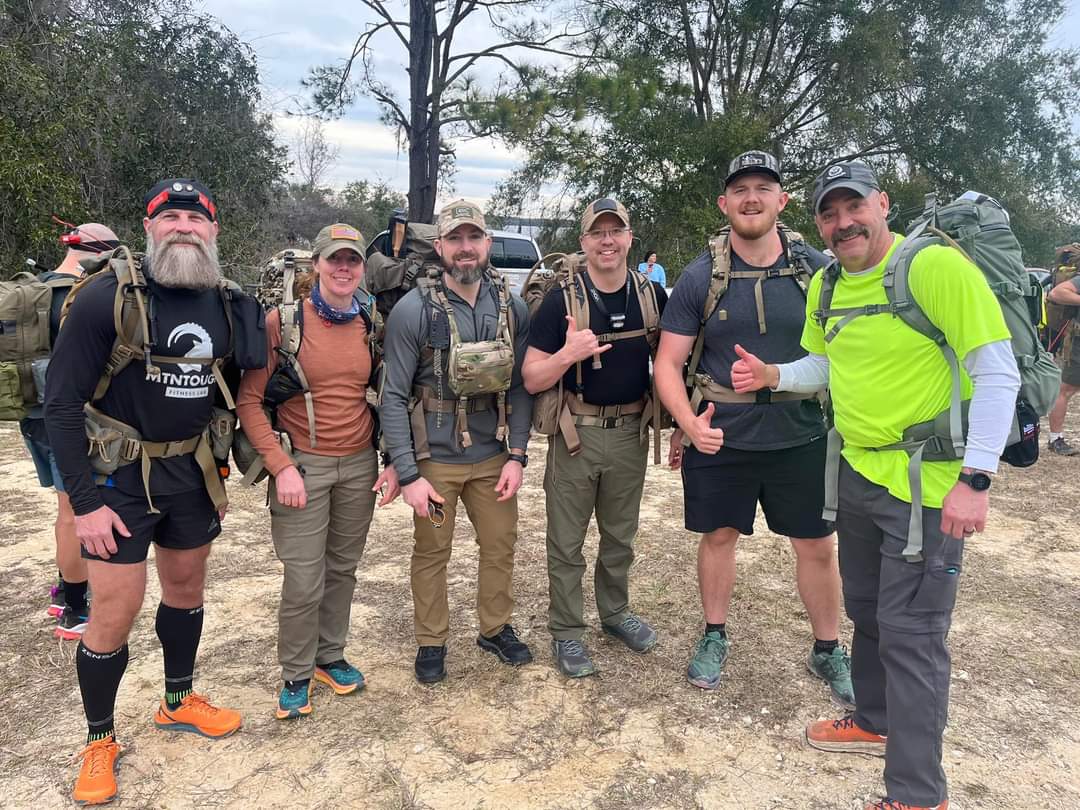
The right team can carry you when you’re fading — mentally and physically. OCALA is where I’ve built friendships I’ll have for life. But choose your team wisely. Too many people and you’ll be constantly out of sync on breaks, bathroom stops, and pace.
Small groups move better. On my first OCALA, Margie fell into the water and kept going without complaint. David took a hard fall, injured his shoulder, and had to withdraw. Michael saved my race by handing me electrolytes when I was on the edge of falling apart.
Those moments stick with you. They’re why the bonds you build on this trail run deeper than just a finish line photo.

Going Solo
Running OCALA solo is a different beast. No one to pace you. No one to share the mental load. But it’s also pure focus. On my second attempt, I stayed locked in from the start. Every decision was mine. Every high and low, mine alone.
It’s harder, yes — but it’s also a whole different kind of reward when you cross that finish line.

GRIT — The Deciding Factor
When your body is tired, your feet hurt, and you’re staring at miles still to go, GRIT is what keeps you moving. It’s what separates finishers from DNFs.
I’ve been pushed to that point in both my OCALA finishes. It’s not just about being tough — it’s about refusing to quit, even when quitting feels like the smart choice. If you can hang onto that, you’ll find the finish.

FORGED IN FAILURE. FUELED BY GRIT.
That’s what OCALA is all about — and it’s the same drive behind everything we do at Carrving Trails. If you’re thinking about stepping up to the Florida Trail’s toughest ruck challenge, I’m here for any of the finer details — from foot care to gear setup to pacing strategies.
Drop a comment, send me a message, or find me out on the trail. Just remember… the trail won’t CARRVE itself. Neither will you.



Leave a Reply