
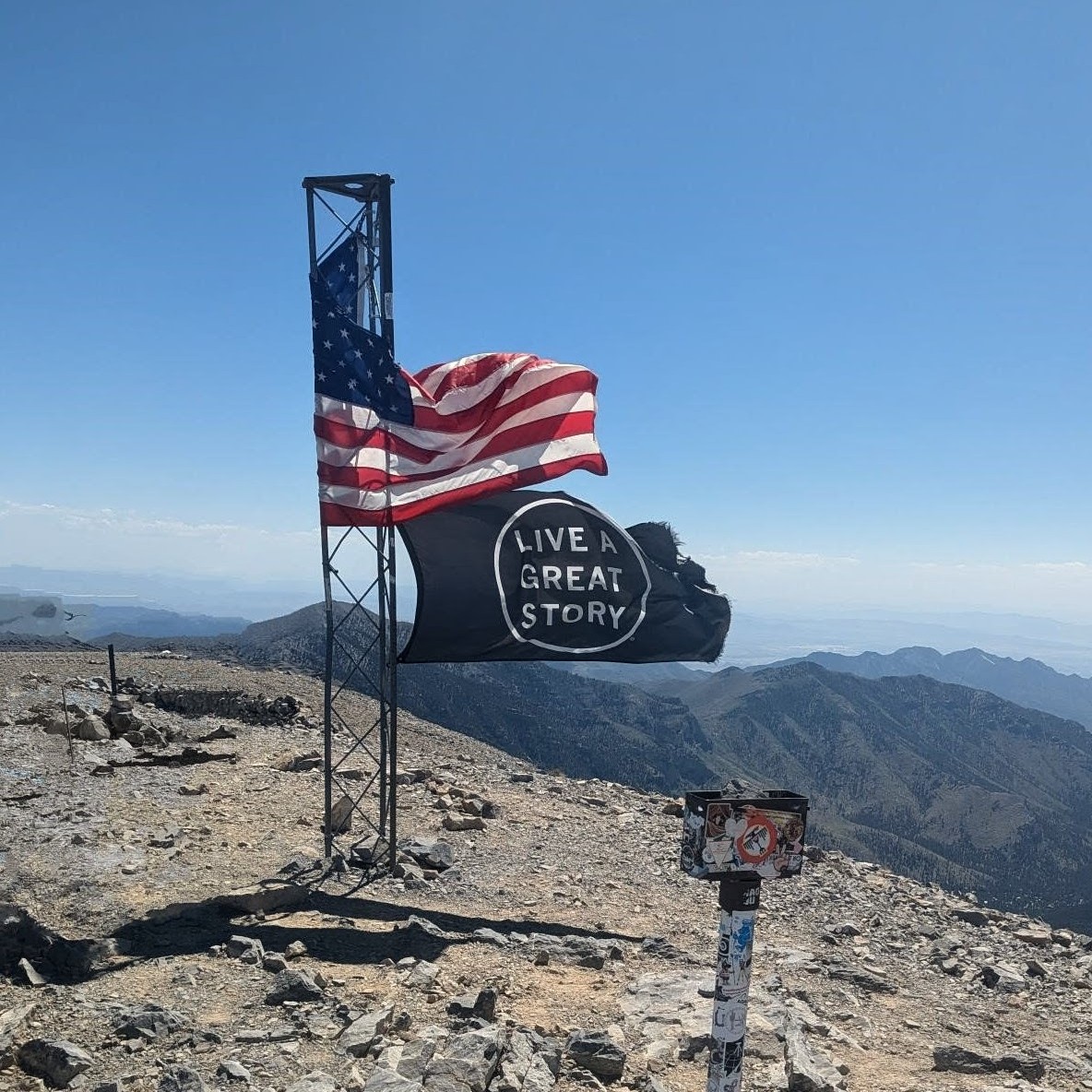
In my twenties, I chased medals — but I never quite made it. I competed in “safe” events where failure was unlikely. I wanted the feeling of accomplishment without the risk of falling short.
When I started rucking, that changed. I didn’t believe in myself at first. But the more I failed, the more I learned that belief doesn’t come from success — it comes from testing your limits and getting back up when you fall.
I’ve lived some amazing experiences — the kind that change how you see life, struggle, and growth. I wish everyone could feel that same sense of discovery — the mix of exhaustion, clarity, and gratitude that only comes from putting yourself on the edge and realizing you’re capable of more than you thought.
Now, I choose events based on the possibility of failure. That’s where the learning happens. It’s not about seeking defeat — it’s about creating opportunities to grow. The challenge has to be real, the risk has to matter, and the outcome has to be uncertain.
I don’t chase medals. I chase failure — because failure is harder, purer, and far more honest.
Lesson 1: Quitting at CENTURY
My first real encounter with failure came at Operation CENTURY, a 100-mile ruck through the mountains. I stopped at 42 miles.
I wasn’t broken. My legs worked. My head was clear enough. I could have kept going — but I didn’t. Somewhere before that moment, I’d made a quiet deal with myself that 42 miles would be “enough.” When I got there, my body simply followed through on what my mind had already decided.
Quitting isn’t dramatic. It’s quiet. It brings relief first, then regret. The echo of that choice followed me for months. Every long training ruck afterward carried the same question: What if I had kept going?
CENTURY taught me that failure doesn’t always come from weakness — it often comes from the limits we create in our own minds.
Lesson 2: Failing with Honor at DAGGER
Then came Operation DAGGER. I didn’t meet the standard that day, but I carried myself honorably through every challenge we faced.
We did more than miles at DAGGER. It was physical, mental, and emotional in ways that can’t be measured by distance or time. There were moments of teamwork, reflection, and personal reckoning that I’ll never forget. One moment on the beach in particular — quiet, heavy, and honest — I’m not sure that will ever be duplicated.
DAGGER reminded me that even when you don’t hit the mark, you can still walk away proud. I may not have finished the event, but I left with something deeper. That experience taught me that failure isn’t always about falling short — sometimes it’s about discovering who you are when there’s nothing left to prove.

I may have been destined for failure this morning.
Lesson 3: Forced Failure at Barkley — Learning to Surrender
A few weeks ago, I faced a very different kind of failure at the Barkley Fall Classic. I was sick — chest and sinus congestion — but I showed up anyway. My legs were ready. My lungs weren’t.
I made it to the Prison, one of the most iconic and brutal points in the course. I was capable of making the marathon cutoff, and I knew it. But every uphill burned, and every breath was shallow. Standing at the base of that next climb, I knew the decision was already made.
That failure didn’t feel like CENTURY. I didn’t choose it — my body did. It wasn’t about quitting; it was about surrendering.
Surrender isn’t giving up — it’s recognizing when continuing would only dig a deeper hole. It’s a form of strength most of us never want to admit exists. Barkley taught me that toughness isn’t just about refusing to stop; sometimes it’s about having the humility to listen when your body says, not today.
CENTURY taught me about control. DAGGER taught me about honor. Barkley taught me about surrender. Each one stripped away a layer of ego and rebuilt something stronger underneath.

The Mental Game
I didn’t come to the realization of how valuable failure truly is until Barkley hit. I had completed the marathon there before, and this year I trained so hard that I couldn’t imagine anything less than what I previously did.
Mentally, it took a few weeks to understand its impact — to sit with it, to replay it, and to think about my other failures. What made each one different, and why they mattered more than the medals ever did.
As Yogi Berra once said, “90% of the game is half mental.” It’s something my parents used to say growing up, and I’d laugh at how ridiculous it sounded — but I get it now.
That quote applied to baseball, but the truth is it applies to so many other aspects of life — especially rucking and endurance sports. The mental side is what separates finishing from quitting, composure from panic, and confidence from doubt.
That sharpening — that realization that my mental state needed training just as much as my legs — will take me further than any event ever could. I’ve come to understand how important the mental side is: don’t let it beat you, let it teach you.
Why I Chase Failure, Not Medals
I never really chased medals — I just wasn’t that good. I wasn’t built to collect podiums or shiny finishes. I signed up for tough events because they forced me to confront who I was and what I could handle.
Somewhere along the way, I realized that chasing failure was harder than chasing a finish. Anyone can push for the medal if they’re willing to suffer long enough. But to walk straight into something you might not complete — to test yourself without a guaranteed outcome — that’s where the real growth happens.
Failure is more than a moment; it’s a test of the mind. It hangs with you longer than a win. It follows you quietly — in training runs, in early mornings, in the moments before the next start line. You can’t out-train it, you can only face it.
No one teaches you how to deal with it. It’s hidden under the highlight reels and post-race smiles. People rarely talk about it, but it’s there — the voice that asks, what if I’d pushed one more mile?
Failure used to frustrate me. Now, it fuels me. Somehow, I learned that failure forces me to figure out why it happened and what I can do next to avoid it. It made me mentally sharper, more disciplined, and more self-aware.
Talking with other athletes helped me understand how much mindset matters — and how mine needed work. Each failure forced me to look inward, to rebuild not just how I train, but how I think.
Part of chasing failure has been finding the hardest events across the country — the ones people look at and think I’m crazy for signing up for. I just smile and tell them they could do it too. Because they could.
Physically, we’re capable of so much more than we give ourselves credit for. I’ve proven that to myself, event after event. But what I’ve gained the most from isn’t the finish lines — it’s the composure that came after failure.
Now, when I show up to an event, I’m calm, cool, and ready to test. Failure doesn’t scare me anymore — it sharpens me.
Every failure — CENTURY, DAGGER, BARKLEY, and soon BYU — built that mindset. They taught me that growth hides in discomfort, in unfinished miles, in lessons that medals can’t teach.
I don’t chase medals.
I chase failure — because failure is harder, purer, and far more honest.
And that’s exactly where I want to be.



Leave a Reply